Giuseppe Barbera
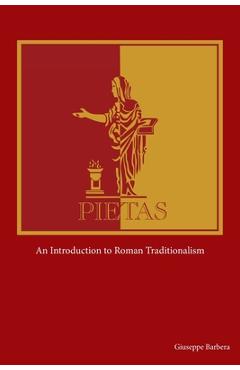
Pietas: An Introduction to Roman Traditionalism - Giuseppe Barbera
196,34 lei245,42 lei-20%
Economisești 49,08 lei
✔ În stoc la libris.ro
Vezi oferta la libris.ro
Economisești 49,08 lei
✔ În stoc la libris.ro
Vezi oferta la libris.ronThe last four decades have seen the emergence and steady growth of ethnic religious studies in academia. It has all the major characteristics that define a religious studies subject, including peer-reviewed journals, annual conferences, a dedicated unit in the American Academy of Religions, and a visible contingent at the World Parliament of Religions. The discriminatorily selective artificial constraint in humanities that genuine research stems only from an objective non-adherent point of view has finally been consigned to the dustbin, and centuries of hidden knowledge has gushed out from the insiders of all traditions around the world. This treasure has significantly enriched not just religious studies but the entire humanities academic space. In Europe, this trend was driven primarily by the phenomenal growth in practicing membership within every ethnic faith of the continent, from Slavic traditions in Russia to Celtic Druidism in Ireland and from Asatru in Sweden to Hellenism in Greece. In the last twenty or so years, these groups have come out from practicing in secrecy to building temples and holding large gatherings in public spaces. Local, provincial, and national governments across Europe and the international organizations, including the European Union and the United Nations, either already have the framework to provide the necessary protection of their fundamental religious rights or are working with these traditions to remedy any gaps therein. The media, society